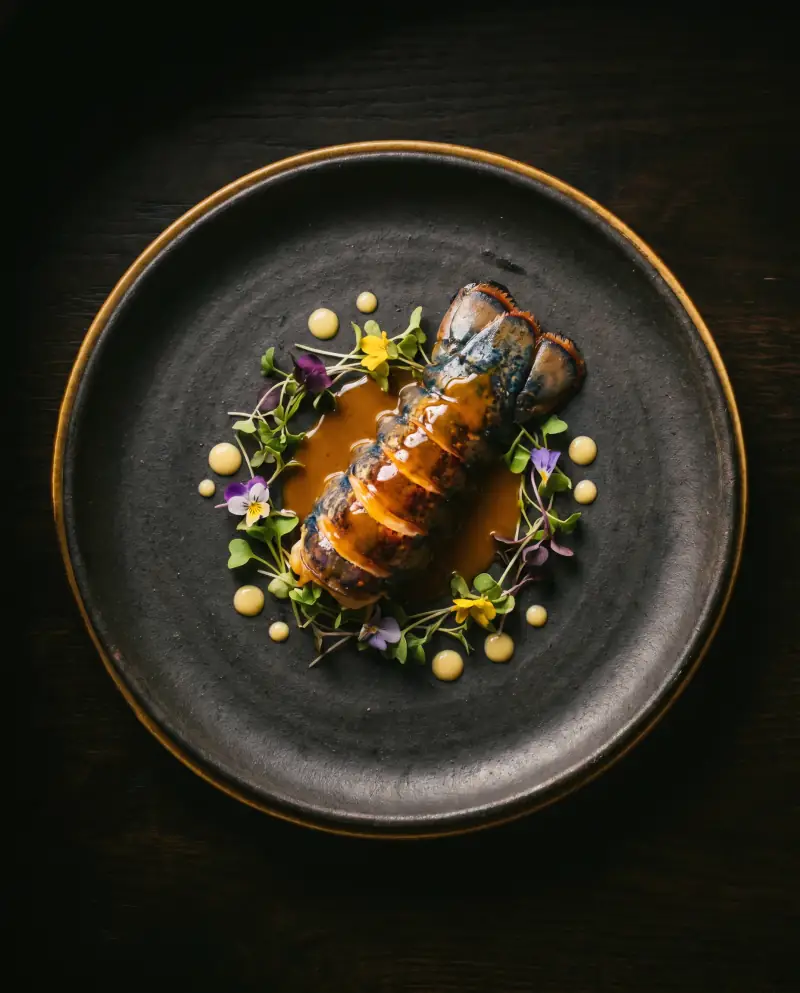
The blue lobster (Homarus gammarus) is the totem animal of the Brittany coast. Not to be confused with its North American cousin (Homarus americanus), redder and more fleshy but less refined on the palate, the European lobster has a deep indigo blue carapace, smaller, more aromatic, rarer.
Month-by-month season calendar
January — February: winter rarities
Very limited fishing. Egg-bearing females are protected by quota. Captured males are large but molting, chunkier flesh. Price: €60-90/kg at auction. Reserved for tables prioritizing rarity over absolute quality.
March — April: gradual return
Seasonal awakening. March remains fragile (water 9-11°C, low activity). April: spring molt, excellent flesh quality after carapace re-formation. Price: €50-70/kg. Maëlys starts integrating lobster in the Embruns menu from mid-April depending on catch.
May — June: first peak season
Full season. Water 14-17°C, active lobsters, dense flesh, maximum marine flavors. Daily auction availability. Price: €45-60/kg, the most accessible of the year. Ideal window for classic French-style lobster (steam + brown butter).
July — August: tourist peak, demand pressure
Absolute demand peak (summer holidays) coinciding with stable but not exploded production. Prices climb to €55-75/kg. Quality remains excellent. In restaurants, booking delays lengthen (3-6 weeks at Les Embruns).
September — October: second peak
Restart after September. Water still warm (16-18°C), lobsters fattened from three summer months. Densest flesh of the year according to fishermen. Price: €50-70/kg, return to average. Sommeliers' preferred period (Burgundy-Loire white wine pairings at peak).
November — December: pre-holidays
Demand explodes for holidays (Christmas, New Year). Fishing technically possible but competing species (Saint-Jacques) dominate markets. Prices spike to €70-100/kg in pre-Christmas weeks. Poor value-for-money: prefer October.
« If you give me a blue lobster in June, I serve it steamed 4 minutes. Brown butter, Guérande salt, nasturtium flower. Nothing more. The season does all the work. In January, I need more handcraft to compensate. »
Differences with American lobster
American lobster (Homarus americanus, nicknamed 'Canadian lobster') is bigger (up to 4 kg vs 1.5 kg for the Breton) and cheaper (€25-40/kg average). Its flesh is bulkier but less aromatic. Caught in Northwest Atlantic (Maine, Nova Scotia), it arrives alive in France via Roissy after 36-48h transport.
At Les Embruns, we serve only Brittany blue lobster. Matter of freshness (2-3 hours boat-to-kitchen vs 36-48h for American), terroir consistency, and support for La Turballe and Le Croisic coastal fleet.
How to cook it at home
Buy live from a trusted fishmonger. Court-bouillon cooking: 6 minutes for 500 g, 8 minutes for 700 g, 10 minutes for 1 kg. Salted boiling water 10 g/L + 1 glass white wine + 1 studded onion + 1 carrot. Plunge head-first, cook uncovered. Remove, wait 5 minutes before opening (carryover cooking).
Maëlys' tip: do NOT plunge directly into boiling water. Sear first in steam 30 seconds to put the animal to sleep — debated ethical gesture but also preserves flesh juiciness (less muscle stress = less tension = better texture).